Understand, Anticipate, Act
for Global Health (One Health)
Major health challenges rarely unfold within a single sector. Yet our responses often remain fragmented across human, animal and plant health, environmental sustainability, organizations and territories. Global Health and One Health seek to move beyond these silos by focusing on the interdependencies that shape health, rather than addressing their consequences in isolation (Ding et al., 2024; Guzmán, 2022; Kleinman, 2010; Ridde et al., 2022).
Taking a dynamic view of socio-ecological systems also changes how we act (Lindoso, 2017; Rabinowitz et al., 2018). Health challenges rarely have a single cause, and acting at one point in a system can generate effects elsewhere through cascading processes. The key questions therefore become where and how to act, and at what point in time, to achieve meaningful change without simply shifting the problem elsewhere.
Women’s Health & Health Equity

Women’s health continues to be shaped by inequities in access to diagnosis and care, living conditions, and employment trajectories. Endometriosis is a clear example of how inequity in access to diagnosis can develop: women may have their symptoms dismissed or psychologized, struggle to have their experience recognized both socially and medically, and then face further barriers in navigating the healthcare system and accessing appropriate diagnosis and care.
My work addresses these different points of disruption, from early identification in primary care to the social and occupational consequences of illness. In breast cancer, for example, I contributed to the development of a regional return-to-work program, working collaboratively with women, healthcare professionals, employers and institutional stakeholders. Rather than placing the full burden of adaptation on women and their families, this stakeholder-centered approach considers the needs and adaptations required across the system, as well as how changes for one stakeholder may affect others and the broader ecosystem.
Are you developing a women’s health initiative?
I can provide targeted expertise or support your project over time, depending on your needs: training, scientific review, strategic advisory, project support or academic partnership.
Prevention, Vaccination & Screening
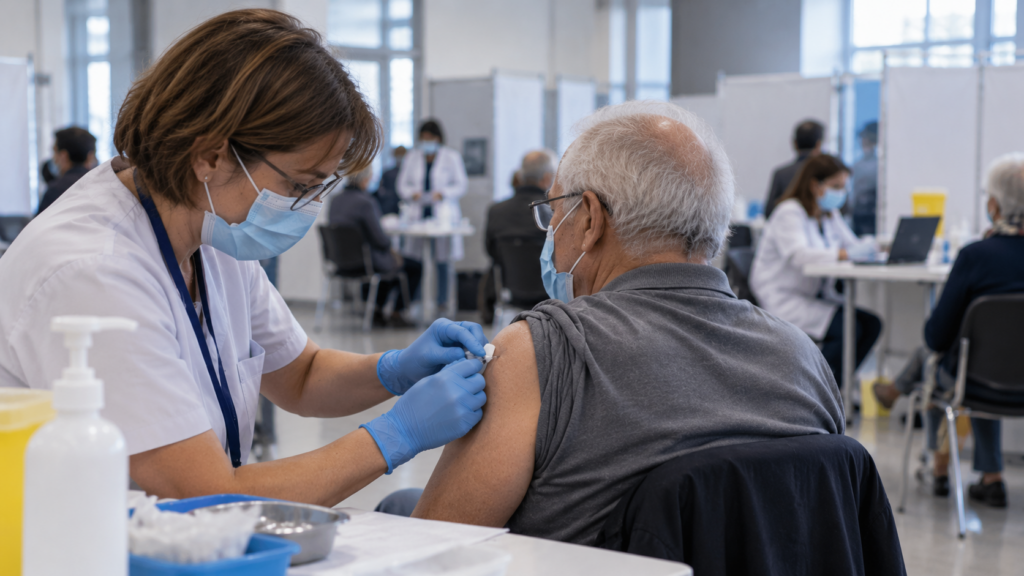
Advances in biotechnology have transformed vaccination, screening and treatment. Yet their potential remains limited when the populations they are intended to benefit cannot access them, do not use them, or use them in ways that limit their effectiveness. The challenge is therefore to create the conditions for effective and sustained uptake. This may involve bringing services closer to populations when access is difficult, rethinking communication strategies, or fostering intrinsic motivation in the face of hesitancy (Miller & Rollnick, 2013). Adoption also depends on whether these innovations can be successfully integrated into existing practices and resources.
In my work, I therefore seek to create a form of symbiosis — or, at minimum, commensalism — with the way people and organizations already operate. Rather than adding new professionals or programs that may further increase complexity, I prioritize connecting and leveraging existing resources and stakeholders. This approach underpins, for example, my work on organized colorectal cancer screening, HPV vaccination, and the implementation of self-sampling for cervical cancer screening in underserved areas (Broc, 2026).
Are you developing a prevention, vaccination or screening initiative and looking to drive behavior change?
I can provide targeted expertise or support your project over time, depending on your needs: training, scientific review, strategic advisory, project support or academic partnership.
Access to Care, Diagnostic Pathways & Complex Care

Diagnostic and care pathways are complex systems that require close coordination among the stakeholders involved. When coordination breaks down, pathways become fragmented and critical gaps can emerge. These gaps are particularly common at the interfaces between the medical, psychological, social and legal dimensions of care, and can become especially visible during transitions between hospital and community-based care (Mills et al., 2022). They also reflect the diversity of stakeholders involved, some of whom operate beyond the healthcare system itself. Employers, for example, must address the consequences of employees’ health conditions while remaining within their legitimate role and respecting medical confidentiality, often with limited understanding of the health-related constraints involved. Patient organizations also play a critical role by addressing needs that institutional services do not adequately meet, although these compensatory responses may become embedded over time without resolving the underlying system failures.
When coordination is insufficient, part of the burden of coordination and decision-making shifts to patients themselves. They must navigate information, identify the right professionals, organize their own care pathways and sometimes make decisions largely on their own. This can reinforce feelings of abandonment or lack of recognition, while also leading to forms of self-management that may become excessive or inappropriate when patients are left to find, interpret and evaluate solutions concerning their health without adequate support.
I encounter these challenges across my work, whether reducing diagnostic delays in endometriosis and, more broadly, conditions with nonspecific symptoms; improving care pathways and integrated decision-making in oncodermatology and gastrointestinal oncology; or better integrating the medical, psychological and social dimensions of palliative care for people experiencing severe social vulnerability. Using a functional, ecosystem-based assessment, I focus first on improving how the system operates and how its components work together, before considering whether another component should be added to an already complex system.
Are you looking to improve access to diagnosis or care by strengthening coordination across stakeholders, organizations and services?
I can provide targeted expertise or support your project over time, depending on your needs: training, scientific review, strategic advisory, project support or academic partnership.
One Health, Environments, Territories & Health Systems

The way we live, produce and shape our territories is transforming the environments we depend on. These changes affect air, water and soil quality, place increasing pressure on natural resources and biodiversity, and contribute to climate change. In turn, they reshape our exposures and the interactions between humans, animals and their ecosystems, with major implications for health — from toxic and other environmental exposures to vector-borne and zoonotic diseases, emerging infectious threats, and the health impacts and hazards associated with climate-related events.
Putting One Health into practice means translating these interdependencies into decisions and action. It requires supporting transitions and bringing together stakeholders who may have different objectives, interests and constraints — and sometimes even different definitions of the problem itself. My approach focuses on identifying where these systems intersect and determining where to act, with whom, through which levers and at what point in time, while considering the effects and constraints that any change may generate across the wider system. This perspective led me to co-found ICARES, the Institute for Understanding, Anticipation and Intervention in Environment and Global Health, within the MedVallée ecosystem. At ICARES, scientists, practitioners and citizens work together to translate these challenges into action at the territorial level, anticipate future developments and design responses grounded in local realities.
Are you looking to integrate a One Health approach into your project, organization or territory? For example: sustainable behaviors, zoonotic disease prevention or sustainable food systems.
I can provide targeted expertise or support your project over time, depending on your needs: training, scientific review, strategic advisory, project support or academic partnership.
Health Program Evaluation & Innovation
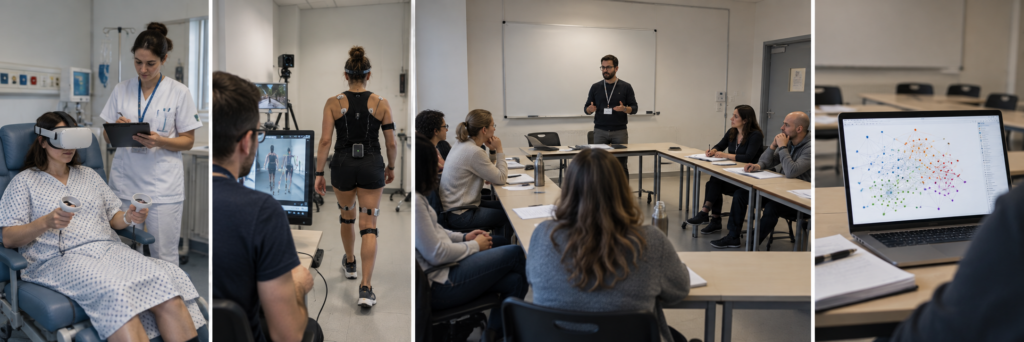
Evaluating a program or innovation is about more than measuring whether it works. My approach focuses on understanding what works, for whom, how and under what conditions by examining outcomes alongside the mechanisms that produce them, the conditions that shape adoption and implementation, and the context in which the intervention operates. I draw on realist evaluation and frameworks such as ICAMO, CMO, FIC and BCIO (Pawson, 2010; Villeval et al., 2019; Skivington et al., 2021), combining them as needed with experimental, qualitative, longitudinal or single-case methods. The goal is to produce evidence that directly informs decision-making: identifying what should be retained, adapted, strengthened or discontinued before wider implementation or scale-up.
Are you looking to evaluate, adapt or scale up a health program, intervention or innovation?
I can provide targeted expertise or support your project over time, depending on your needs: training, scientific review, strategic advisory, project support or academic partnership.